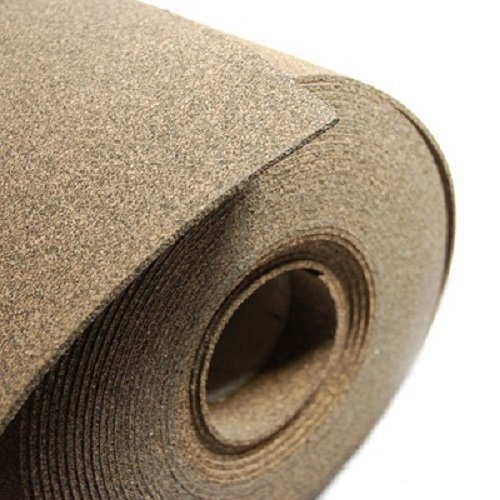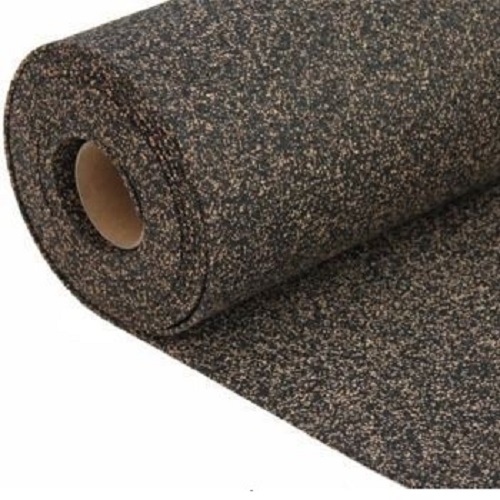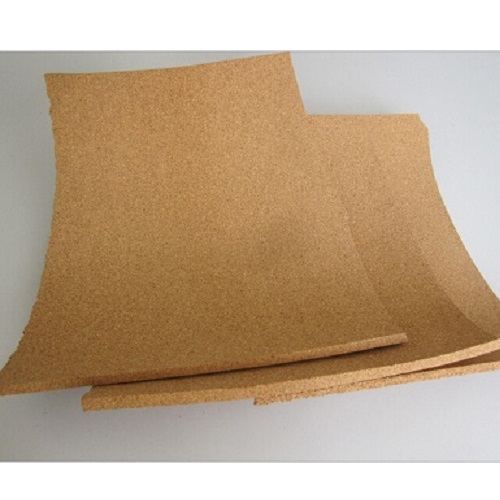

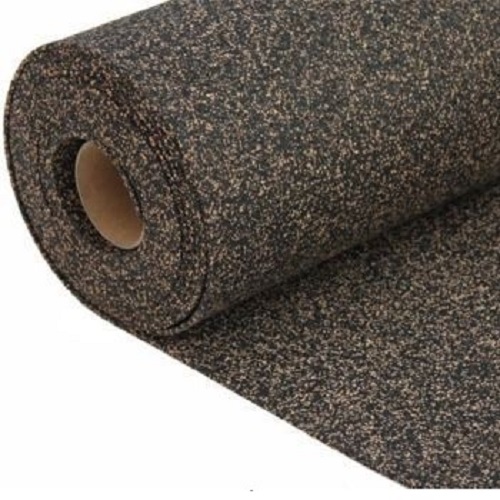
In demanding industrial environments, gasket materials must withstand vibration, uneven surfaces, thermal expansion, and fluid pressures. The real engineering challenge lies in balancing two seemingly opposite traits: flexibility (the ability to bend and conform) and compressibility (the capacity to be squeezed into irregularities). A Cork Rubber Sheet masterfully bridges this dichotomy. By fusing natural cork granules with high-quality NBR or SBR rubber binders, we at Ningbo Kaxite Sealing Materials Co., Ltd. have perfected a composite that remains pliable under stress while offering outstanding compression recovery. This unique combination ensures leak-free joints, reduced bolt torque loss, and long service life in gasketing, sealing, and anti-vibration applications.
Throughout our two decades of manufacturing, our factory has tested countless recipes to optimize the cork-to-rubber ratio. The result? A material that flexes without fracturing and compresses without taking a permanent set. Our Cork Rubber Sheet adapts to rough flanges, absorbs structural noise, and bounces back after pressure removal. This article dives deep into the science, parameters, and real-world performance that make our product indispensable for pumps, compressors, automotive panels, and HVAC systems. Whether you are an engineer or a procurement specialist, you will discover why our Cork Rubber Sheet delivers reliability where rigid materials fail. And we will show you the exact technical data that proves its superiority.
📌 Table of Contents
The hybrid structure of a Cork Rubber Sheet mimics nature’s honeycomb but with elastomeric resilience. Cork granules are composed of suberin and lignin, giving them a gas-filled cellular architecture. When combined with rubber binders in our factory, these granules act as micro-springs. Under bending forces (flexibility), the rubber matrix stretches while cork cells slide past each other, preventing crack propagation. Under compression loads, the air inside cork cells collapses elastically, then re-expands as pressure is released. This dual-phase mechanism ensures that our Cork Rubber Sheet maintains sealing contact even on wavy flanges. Let us break down the three key physical drivers:
Moreover, the compression set (measured according to ASTM F36) of our Cork Rubber Sheet is typically below 15% at 25% compression. This low permanent set proves that flexibility and compressibility are not trade-offs but synergistic features. Our factory has optimized particle size distribution (0.5–1.2 mm cork grit) to maximize conformability while preserving tensile strength. The result is a gasket material that seals under low bolt torque, adapts to thermal cycling, and remains flexible for easy installation. Unlike pure rubber sheets that may extrude under high pressure, cork rubber retains its shape due to internal friction of cork particles. That is the engineering secret: a composite that breathes and springs back simultaneously.
Compressibility alone is insufficient if the material takes a “set” after initial tightening. Flange movement, thermal expansion, or pressure spikes will cause leaks if the gasket cannot rebound. Our Cork Rubber Sheet delivers exceptional compressibility (typically 25% to 40% under 10 MPa load) while maintaining a recovery rate above 85%. Why does this matter? Because real bolted joints experience vibration and thermal cycles that reduce clamp load. A material that compresses but fails to recover leads to gap formation. Our factory has documented, through cyclic compression tests, that after 10,000 cycles at 5 Hz, the thickness loss is under 5%. This durability stems from the cork’s viscoelastic nature combined with rubber’s resilience.
Consider an engine valve cover gasket: temperatures swing from -30°C to 150°C. Most elastomers harden or soften, but our Cork Rubber Sheet maintains compressibility across this range due to cork’s low thermal expansion coefficient. The rubber micro-phase provides flexibility at low temperatures (brittle point below -40°C), while cork prevents excessive swelling in oils. The permanent deformation (compression set) remains ≤12% when tested in IRM 903 oil for 70 hours at 100°C. That means you can reuse the same gasket during maintenance intervals, saving costs and reducing downtime. Additionally, the material fills flange scratches and pits because of its high conformability — a direct result of controlled compressibility combined with surface pliability. Our factory produces sheets that meet ASTM D2000 specifications, ensuring no relaxation-induced leakage. To put it simply: a gasket that stays flexible and rebounds after compression eliminates the need for frequent retightening, boosts safety, and extends equipment lifespan.
Not all Cork Rubber Sheet formulas are equal. Our factory produces three density grades: low (0.7–0.9 g/cm³), medium (1.0–1.2 g/cm³), and high (1.3–1.5 g/cm³). Each density shifts the flexibility-compressibility balance to target specific applications. Lower density sheets contain more cork volume, offering higher compressibility (up to 45%) and excellent vibration damping. They are ideal for lightweight covers and irregular surfaces. Medium density sheets balance both properties, becoming our best-selling general sealing grade. High density sheets emphasize less compressibility but greater tensile strength and extrusion resistance, suitable for high-pressure hydraulic systems.
Thickness also plays a critical role. For a given density, a 1.5 mm thick our Cork Rubber Sheet will have higher apparent stiffness compared to 3.0 mm thickness because the compression load is distributed over fewer cork granules per unit cross-section. However, thicker sheets offer greater total compression travel, meaning they can accommodate larger flange gaps. Our factory provides thicknesses from 0.8 mm up to 12 mm. To help engineers select the right combination, we compiled a selection guide:
In practice, our Cork Rubber Sheet allows customization: by adjusting the cork/rubber ratio (typically 60/40 to 80/20), we can increase cork content for higher compressibility or rubber content for better flexibility and oil resistance. Our factory works with clients to prototype the exact balance needed, ensuring that flexibility never compromises sealing integrity. Always consider both density and thickness when designing a gasket — contact our engineers at Ningbo Kaxite Sealing Materials Co., Ltd. for tailored recommendations.
Data-driven engineers require objective metrics. Our factory tests every batch of Cork Rubber Sheet under ISO 9001 and ASTM standards. The following parameters demonstrate the unique synergy between flexibility (measured as bendability and elongation) and compressibility (measured as compression under load and recovery). Below is a certified specification table for our standard medium-density grade, which most clients select for general sealing. All values represent typical results from Ningbo Kaxite Sealing Materials Co., Ltd. internal quality reports.
| Property | Value (Typical Range) | |
| Compressibility (ASTM F36, 25% load, 7 MPa) | 25% – 40% | |
| Recovery after compression (ASTM F36) | 85% – 92% | |
| Tensile strength (ASTM D412) | 2.5 – 4.5 MPa | |
| Elongation at break (flexibility indicator) | 100% – 180% | |
| Compression set (22h @ 100°C, 25% deflection) | ≤15% | |
| Shore A hardness (ASTM D2240) | Density range (g/cm³) | 0.9 – 1.2 (customizable) |
| Temperature resistance (continuous) | -40°C to +125°C (peaks to 150°C) | |
| Oil swelling (IRM 903, 70h @ 100°C) | ≤15% volume change | |
| Flexural endurance (MIT test, cycles to failure) | >50,000 cycles |
These numbers translate into real reliability: elongation above 100% ensures that our Cork Rubber Sheet can wrap around curved flanges without fracture. Compressibility between 25-40% allows it to fill deep scratches while the high recovery maintains bolt torque for years. Our factory uses digital compression-recovery testers to ensure every roll meets these metrics. Compared to conventional cork or rubber alone, our composite offers superior vibration damping (loss factor >0.15) and minimal creep. For specialized needs, we at Kaxite can adjust the formula to lower compression set or enhance flexibility. All these parameters prove that flexibility and compressibility are not only compatible but coexist beautifully in our product.
From automotive powertrains to food processing machinery, Cork Rubber Sheet excels where rigid gaskets fail. Below are five use cases demonstrating the flexibility-compressibility advantage in action:
Moreover, Ningbo Kaxite Sealing Materials Co., Ltd. has developed food-contact grade cork rubber (FDA compliant) for beverage filling lines, where cleanliness meets mechanical conformity. In all these cases, the synergy of flexibility and compressibility reduces leakage pathways, lowers maintenance costs, and simplifies inventory because one material serves multiple roles. Our factory produces custom die-cut shapes and rolls, enabling just-in-time manufacturing. When your application demands both give and resilience, trust our Cork Rubber Sheet to deliver unrivalled performance.
To recap, the unique microstructure of cork granules embedded in a flexible rubber matrix is what enables a Cork Rubber Sheet to combine flexibility and compressibility. This composite outperforms conventional gaskets by offering high conformability to irregular flanges, exceptional recovery after compression, and resistance to oils and temperature extremes. Our factory, Ningbo Kaxite Sealing Materials Co., Ltd., has refined the manufacturing process over 20 years, ensuring every sheet meets strict dimensional and mechanical tolerances. Whether you need a medium-density general purpose sheet or a customized high-recovery formula, our team provides technical support and fast sampling. Contact Ningbo Kaxite Sealing Materials Co., Ltd. today for free technical consultation and samples. Request a quote for our Cork Rubber Sheet tailored to your exact pressure and temperature conditions. Our engineers will help you select the optimal density, thickness, and rubber type (NBR/SBR/EPDM). Boost equipment reliability and slash downtime — reach out now via our website or email.
Q1: Can Cork Rubber Sheet maintain both flexibility and compressibility in sub-zero temperatures?
Yes, our Cork Rubber Sheet retains flexibility down to -40°C because the NBR rubber base remains elastic, and cork’s closed cells prevent brittleness. Compressibility decreases slightly (approx. 10-15% reduction) but still exceeds 20% at -30°C, which is sufficient for most cold-climate gasketing. Our factory performs low-temperature compression recovery tests to ensure no cracking or permanent deformation. For Arctic applications, we recommend our special low-temp compound that boosts flexibility without sacrificing compressibility.
Q2: How does the compressibility of Cork Rubber Sheet compare to pure neoprene or EPDM rubber?
Pure rubber sheets typically show compressibility of 10-20% under the same load, whereas our Cork Rubber Sheet achieves 25-40% compressibility. Rubber alone rebounds well but cannot fill deep irregularities because it flows rather than compresses. Cork rubber’s higher compressibility comes from cork cell collapse, which also provides better surface conformity. Nevertheless, our product recovers 85-92% compared to rubber’s 90-95%, making it nearly equivalent in sealing longevity while superior for gap filling. Many engineers switch from solid rubber to cork rubber for flange compensation.
Q3: Does the flexibility of Cork Rubber Sheet cause creep relaxation over time under constant bolt load?
Minimal creep is one of the advantages of cork rubber. Unlike some flexible elastomers that continue to flow, the cork particles act as a mechanical stabilizer. Our factory measures creep relaxation according to ASTM F38; after 1000 hours at 100°C, our Cork Rubber Sheet shows less than 8% bolt torque loss. This is significantly lower than many fiber-reinforced gaskets. The combination of flexibility and internal cork friction limits lateral creep, ensuring the gasket maintains sealing stress throughout the equipment’s lifetime.
Q4: Can I get a Cork Rubber Sheet that is highly flexible for curved surfaces but still offers high compressibility for uneven flanges?
Absolutely. By adjusting the cork-to-rubber ratio and using finer cork particles, Ningbo Kaxite Sealing Materials Co., Ltd. produces grades with elongation up to 200% and compressibility up to 40% simultaneously. We call this our “ultra-conformable” series. Thicker sheets (3–5 mm) also enhance bending flexibility. Request our flexible grade data sheet, which includes mandrel bend test results showing no cracking at 50 mm radius. Our factory can engineer a sheet that wraps around 2-inch pipe flanges while still providing 30% compression under moderate bolt torque.
Q5: How does fluid exposure (oils, water, acids) affect the flexibility-compressibility balance of Cork Rubber Sheet?
Our standard Cork Rubber Sheet uses nitrile rubber (NBR) which withstands oils, fuels, and mineral oils very well. After 70 hours in IRM 903 oil, flexibility decreases by less than 10% and compressibility changes by less than 5% (within ASTM tolerance). For water/glycol or diluted acids, EPDM-based cork rubber is available from our factory — this retains flexibility and compressibility even after prolonged immersion. Always select the proper rubber type; our engineers provide compatibility charts to ensure the property balance remains intact in your specific fluid. This tailored approach guarantees the sheet retains both its pliability and gap-filling ability.