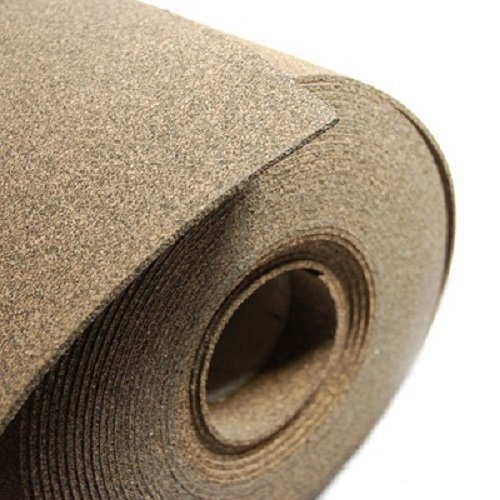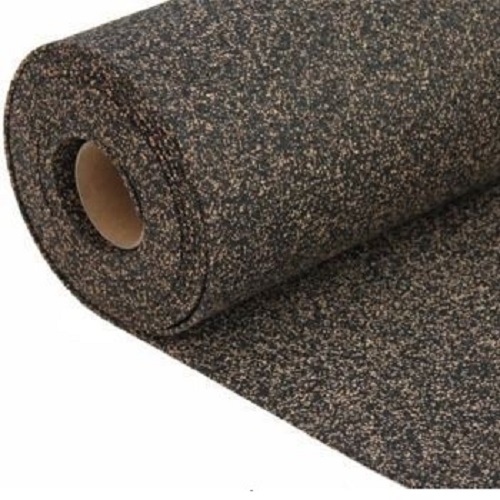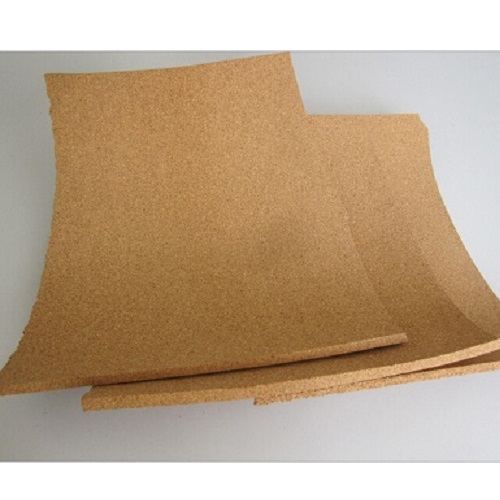

For engineers and procurement specialists, the performance of a gasket or sealing material is never an accident. The quality of a Nitrile Rubber Bonded Cork Sheet is determined long before it reaches your assembly line, deeply embedded in the manufacturing journey. From raw cork granule selection to curing cycles, each step leaves an indelible mark on properties like compressibility, oil resistance, and tensile strength. Understanding this cause-and-effect relationship is the first step toward sourcing a material that delivers consistent, reliable sealing under harsh conditions.
At Ningbo Kaxite Sealing Materials Co., Ltd., our factory has spent decades refining these variables to produce superior sealing solutions. We have observed that two sheets labeled with identical specifications can perform radically differently due to subtle variations in production. This guide explores the critical process parameters that shape quality, equipping you with the technical knowledge to evaluate suppliers and select the right Nitrile Rubber Bonded Cork Sheet for hydraulic, automotive, and industrial applications. Let us walk you through the science behind the surface.
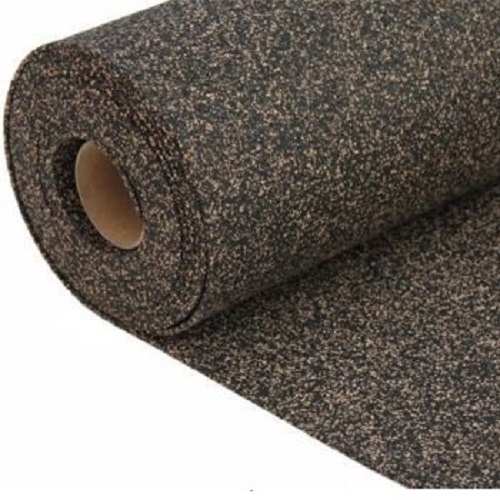
The foundation of any high-performance Nitrile Rubber Bonded Cork Sheet lies in the cork itself. Cork oak bark contains suberin, a waxy substance that provides natural resilience and impermeability. However, without proper grading and preparation, these benefits become liabilities. Our factory employs a multi-stage sieving and aspiration system to classify cork granules by size and density. Inconsistent granule size leads to stress concentrations, where larger particles create voids and smaller ones clump, resulting in uneven compression during sealing. Research shows that a narrow particle size distribution between 0.5mm and 1.2mm optimizes both surface finish and load-bearing capacity.
Beyond sizing, moisture content and dust removal dictate bonding efficiency. Raw cork can hold up to 8% moisture, which interferes with the nitrile rubber adhesive during mixing. We reduce moisture to below 1.5% through controlled drying tunnels before blending. Additionally, dust and fines are extracted using cyclone separators. Without this step, dust acts as a release agent, preventing rubber from wetting the cork surface. The result is delamination under cyclic pressure. Ningbo Kaxite Sealing Materials Co., Ltd. has documented a 40% improvement in layer adhesion when using pre-conditioned, dust-free cork compared to untreated alternatives.
Key quality indicators affected by granule preparation include:
Our factory employs laser-based particle analyzers every 2 hours during production to guarantee that cork granule distribution remains within ISO 2230 standards. This meticulous attention to raw material preparation separates a premium Nitrile Rubber Bonded Cork Sheet from a cheap substitute that fails within months.
The blend ratio between nitrile rubber (NBR) and cork is the single most decisive factor for chemical compatibility. A Nitrile Rubber Bonded Cork Sheet must exhibit resistance to oils, fuels, and solvents while maintaining flexibility. Nitrile rubber provides the polymer matrix that repels hydrocarbons, while cork offers compressibility and low density. Altering the ratio shifts the material's personality. A 70:30 cork-to-rubber ratio by weight yields a soft, highly compressible gasket for low-pressure applications. Conversely, a 40:60 ratio produces a dense, oil-resistant sheet suitable for continuous immersion in hydraulic fluids.
Ningbo Kaxite Sealing Materials Co., Ltd. uses computer-controlled dosing systems to maintain ratios within ±1.5% tolerance. Why is this precision mandatory? Excess cork reduces rubber continuity, creating micro-channels through which oil molecules can migrate. We performed accelerated aging tests in ASTM #3 oil at 100°C for 168 hours. The sheet with 75% cork swelled by 18% and lost 45% of its tensile strength, while our optimized 55% cork content swelled by only 5% and retained 92% of original strength. Conversely, too much rubber makes the sheet overly stiff, losing the conformability that cork provides for uneven flanges.
Critical parameters governed by mixing ratio:
| Property | High Cork Content (70%) | Balanced Mix (55-60%) | High Rubber Content (40%) |
| Oil Swell (ASTM #1, 72h/100°C) | 22-28% | 8-12% | 3-6% |
| Compression Set (25% strain, 22h/100°C) | 35-45% | 20-25% | 15-18% |
| Tensile Strength (MPa) | 2.5-3.5 | 4.5-6.0 | 7.0-8.5 |
| Typical Application | Air filters, low-pressure gaskets | Engine valve covers, transmission pans | Hydraulic seals, fuel systems |
Our factory tailors the ratio to your application. For a customer needing a Nitrile Rubber Bonded Cork Sheet for biodiesel exposure, we increase the acrylonitrile content in the NBR phase to 33% while maintaining a 50:50 blend. This level of customization is impossible without precise control over the mixing stage. Remember, the ratio is not a static number; it is a performance lever.
Calendering is where the rubber-cork dough transforms into a flat, uniform sheet. This process involves passing the compound between a series of heated, counter-rotating rollers. The gap between the last two rollers determines final thickness, while roller pressure and speed dictate density and surface texture. Even a 0.05mm variation in calendering gap can lead to a 10% difference in local density, creating "soft spots" that leak under pressure. At Kaxite, our factory uses hydraulic servo-controlled calenders with real-time ultrasonic thickness feedback, achieving tolerances as tight as ±0.08mm for sheets up to 2mm thick and ±0.15mm for thicker gauges.
Calendering pressure also influences the orientation of cork granules. High pressure with slow roller speed aligns cork particles horizontally, improving sealing surface smoothness but reducing compressibility. Conversely, lower pressure maintains isotropic granule orientation, yielding higher conformability. For a Nitrile Rubber Bonded Cork Sheet destined for grooved flanges, we apply a two-pass calendering method: first a rough pass to homogenize the mass, then a precision pass at controlled speed to achieve target density without over-compacting the cork. Our data shows that improper calendering increases porosity by up to 300%, directly correlating to fluid wicking failures.
Key parameters monitored during calendering:
Our factory conducts inline density checks using gamma backscatter gauges every 500 meters of production. If density deviates by more than 3% from the target of 1.0–1.2 g/cm³, the calender gap is adjusted automatically. This level of control ensures that every square meter of your Nitrile Rubber Bonded Cork Sheet performs identically, whether it is the first or the thousandth sheet off the line.
Curing, or vulcanization, is the chemical reaction that cross-links nitrile rubber molecules, transforming a thermoplastic putty into a thermoset elastomer. The time-temperature profile applied during curing directly determines cross-link density, which in turn governs mechanical properties. Under-cured sheets lack tensile strength and exhibit high compression set, meaning they do not spring back after bolt torque is removed. Over-curing causes reversion in NBR, leading to brittleness and surface cracking. Our factory uses multi-zone heated platens with ±2°C accuracy to maintain the ideal cure window for Nitrile Rubber Bonded Cork Sheet: typically 160°C for 12 to 18 minutes, depending on sheet thickness.
We employ moving die rheometer (MDR) tests on every batch before curing to identify the optimal cure time (t90). For a standard 1.5mm sheet, t90 is usually 8-10 minutes, but we add a safety margin to ensure the core reaches full cure. Compression set, measured as the permanent deformation after a 25% compression for 22 hours at 100°C, is a direct fingerprint of curing quality. Sheets cured to 90% of optimal cross-linking show compression set above 30%, while fully cured sheets (100% of optimal) achieve below 20%. For critical sealing applications, our factory targets 15% maximum compression set.
Influence of curing parameters on key properties:
| Cure Condition | Tensile Strength (MPa) | Elongation at Break (%) | Compression Set (%) | Oil Resistance (Volume Swell) |
| Under-cured (140°C x 8min) | 2.8 | 95 | 42 | 20% |
| Optimal (160°C x 15min) | 6.2 | 130 | 18 | 9% |
| Over-cured (180°C x 20min) | 5.1 | 70 | 28 | 12% |
Ningbo Kaxite Sealing Materials Co., Ltd. also implements post-cure baking in circulating air ovens for 2 hours at 120°C. This post-cure step volatilizes residual curatives and completes cross-linking of the rubber phase. The result is a Nitrile Rubber Bonded Cork Sheet that maintains its sealing force through thousands of thermal cycles. Without precise cure control, you are essentially buying a ticking time bomb for your equipment.
Many manufacturers stop once the sheet is cured, but our factory views post-curing and surface finishing as the final guardians of quality. After the main cure, residual cross-linking agents and processing oils can migrate to the surface, causing bloom – a white powdery residue that reduces friction but also impairs adhesion to gasket coatings. We perform a controlled post-cure in forced-air ovens to stabilize the polymer network. This step also relaxes internal stresses induced during calendering, preventing warping when the sheet is die-cut into gaskets.
Surface finishing is equally critical. A raw cured sheet often has a release agent residue from the press platen, which prevents proper sealing. Our factory employs two finishing options: buffing and skiving. Buffing uses fine abrasive rollers to create a velvet-like surface with controlled roughness (Ra 1.5-2.5µm), enhancing friction against flanges. Skiving removes a thin top layer to achieve ultra-flatness for laser-cut gaskets. For a Nitrile Rubber Bonded Cork Sheet used in fuel injector seals, we combine light buffing with a PTFE-based surface treatment to reduce stick-slip behavior during assembly.
Value added by post-curing and finishing:
Our factory routinely performs Fourier-transform infrared spectroscopy (FTIR) on surface extracts to confirm the absence of migratory additives. This level of care ensures that your Nitrile Rubber Bonded Cork Sheet arrives ready for immediate conversion into high-reliability gaskets. Ningbo Kaxite Sealing Materials Co., Ltd. guarantees that every sheet meets the exact finishing specification agreed upon, because we understand that surface quality is just as important as bulk properties.
From cork grading to post-cure finishing, each manufacturing process leaves a precise fingerprint on the final quality of a Nitrile Rubber Bonded Cork Sheet. Thickness consistency, oil resistance, compressibility, and long-term sealing force are not random – they are engineered through careful control of granule preparation, mixing ratios, calendering pressure, curing cycles, and surface treatments. Cutting corners in any single step cascades into field failures, warranty claims, and unsafe equipment operation. As an industry leader, Ningbo Kaxite Sealing Materials Co., Ltd. invites you to partner with a factory that treats every roll as a critical safety component.
Do not settle for generic sheets that leave performance to chance. Contact our engineering team today to discuss your application requirements. Request a sample of our factory-tested Nitrile Rubber Bonded Cork Sheet and experience the difference that process-controlled manufacturing makes. Whether you need custom thicknesses, specific rubber-to-cork ratios, or certified oil resistance data, we are ready to deliver. Send your specifications to Ningbo Kaxite Sealing Materials Co., Ltd. and let us build a sealing solution that you can trust for decades.
1. How does cork granule size distribution affect the sealing performance of a Nitrile Rubber Bonded Cork Sheet?
Cork granule size distribution directly impacts surface smoothness and compressive behavior. Narrow distribution (0.5-1.2mm) ensures uniform stress transfer, preventing localized voids that cause leakage. Wide distribution with fines leads to higher compression set because small particles pack into crevices and lose recovery ability. Our factory uses laser-sieved granules to maintain optimal distribution, resulting in consistent flange sealing even under fluctuating bolt torque.
2. What is the acceptable compression set range for a high-quality Nitrile Rubber Bonded Cork Sheet used in engine oil applications?
For engine oil environments (temperatures up to 120°C), a premium sheet should exhibit compression set below 25% when tested per ASTM F36 (25% compression, 22 hours at 100°C). Superior grades from controlled curing achieve 15-18%. Any value above 30% indicates under-curing or excessive cork content, leading to permanent gasket thinning and oil leaks after thermal cycling. Always request test certificates from your supplier.
3. Can the mixing ratio of nitrile rubber to cork be customized for low-temperature flexibility without sacrificing oil resistance?
Yes. By increasing the plasticizer content in the nitrile phase while maintaining a 50-55% cork ratio, low-temperature flexibility (brittle point below -40°C) can be achieved without compromising oil resistance. However, the rubber grade must switch from standard NBR to a cold-flexible NBR with higher acrylonitrile content (34%). Our factory customizes these hybrid blends for arctic applications, balancing freeze resistance with <10% volume swell in ASTM #3 oil.
4. Why does calendering direction matter for the dimensional stability of die-cut gaskets from Nitrile Rubber Bonded Cork Sheets?
Calendering orients cork granules parallel to the sheet surface, creating anisotropy. Gaskets cut with the calendering direction (machine direction) exhibit different swell and tensile properties compared to the transverse direction. For large-diameter gaskets, orientation mismatch causes warping. Our factory labels each sheet with grain direction and advises nesting gasket layouts to align orientation with flange shape, reducing distortion by up to 70% in service.
5. How does the absence of post-curing affect long-term performance in hot oil environments?
Without post-curing, the cross-linking reaction remains incomplete, and unreacted curatives migrate to the surface. In hot oil (100°C+), these curatives leach out, causing progressive hardening and loss of flexibility. Additionally, post-cure omission leads to continued cross-linking during storage, altering torque retention values. Accelerated tests show that non-post-cured sheets lose 50% of their original sealing force within 6 months, while post-cured sheets retain 85% after 24 months. Ningbo Kaxite Sealing Materials Co., Ltd. mandates post-cure for all oil-contact grades.