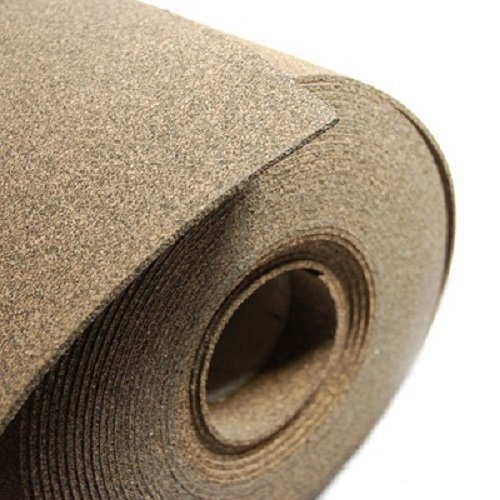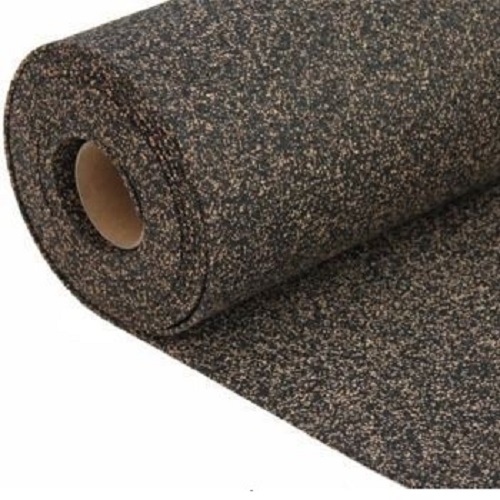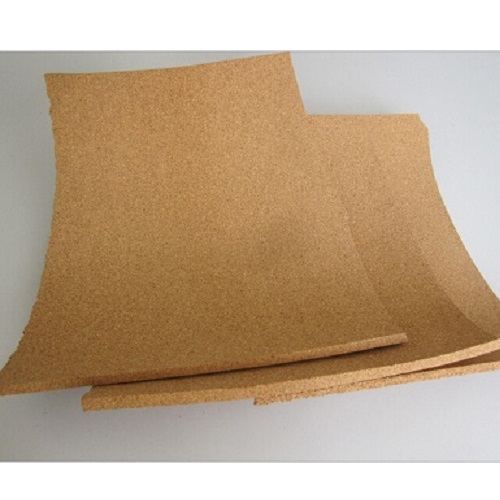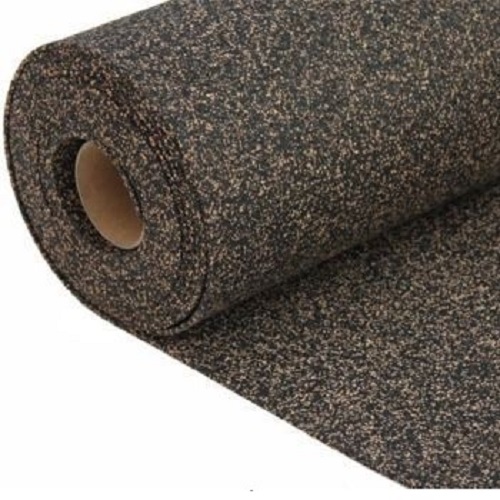

In demanding industrial environments, materials are constantly pushed to their limits by rapid temperature swings. Whether it is a sealing application in an automotive engine, a gasket in HVAC systems, or a vibration-damping layer in heavy machinery, the ability to withstand thermal stress without losing integrity is non-negotiable. Among the vast array of engineered composites, the Nitrile Rubber Bonded Cork Sheet has emerged as a superior solution. At Ningbo Kaxite Sealing Materials Co., Ltd., we have spent decades perfecting this blend, combining the natural compressibility of cork with the oil-resistant resilience of nitrile rubber. The result is a material that doesn’t just survive temperature fluctuations—it thrives under them, maintaining dimensional stability, sealing efficiency, and mechanical strength across a wide thermal spectrum.
For engineers and procurement specialists, understanding how this composite behaves when temperatures rise or plummet is critical. Unlike conventional gaskets that may harden, crack, or lose elasticity, our Nitrile Rubber Bonded Cork Sheet leverages a unique cellular structure and proprietary bonding process. The cork granules provide a natural thermal barrier while the nitrile binder ensures flexibility even at sub-zero conditions. Throughout this article, we will dissect the physical mechanisms, present hard technical data, and answer the most pressing questions. We will also showcase why our factory’s precision manufacturing sets industry benchmarks. By the end, you will have a comprehensive view of why this material is the trusted choice for applications facing extreme thermal cycling.
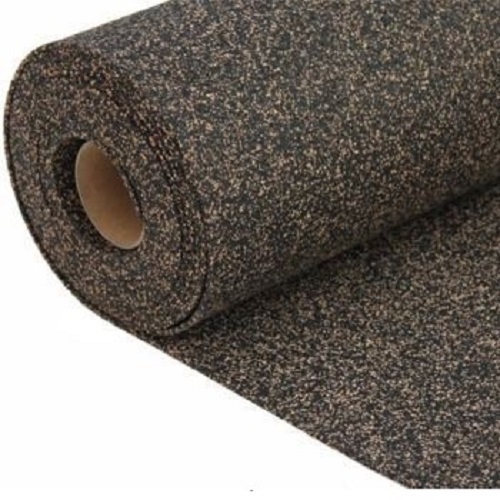
The architecture of a Nitrile Rubber Bonded Cork Sheet is a masterpiece of materials engineering. It is not merely a mixture of cork and rubber; it is a precisely engineered composite where each component plays a strategic role in thermal management. In our factory, Ningbo Kaxite Sealing Materials Co., Ltd., we begin with high-grade cork granules sourced from sustainable cork oak. These granules are microscopic closed-cell structures that naturally contain suberin—a waxy, hydrophobic substance that resists moisture and thermal degradation. The cork acts as a thermal insulator, slowing down heat transfer and providing inherent dimensional stability.
Surrounding each cork granule is a continuous matrix of nitrile rubber (NBR), which is polymerized for maximum oil, fuel, and temperature resistance. The bonding process is critical: we use a proprietary calendaring and vulcanization technique that ensures the rubber encapsulates every cork particle uniformly. This creates a material with a unique combination of properties:
Our rigorous quality control at Ningbo Kaxite Sealing Materials Co., Ltd. ensures that every batch maintains a consistent cork-to-rubber ratio, typically ranging from 60% cork to 40% nitrile rubber by weight, though custom formulations are available. This balance is optimized to handle temperature swings from -40°C to +125°C continuously, with intermittent peaks up to 150°C. The structural integrity is further enhanced by the addition of inert fillers that improve thermal aging resistance. Unlike pure rubber sheets that can soften or flow under high heat, or pure cork that can become friable when dry, the composite maintains its rigidity and flexibility simultaneously. In our testing laboratory, samples subjected to 500 rapid thermal cycles from -30°C to 120°C showed less than 5% loss in compression recovery, a testament to the structural resilience engineered into every sheet.
Compression set—the permanent deformation left after a material is compressed for a period—is the Achilles' heel of many sealing materials when exposed to temperature fluctuations. A high compression set means the gasket will not spring back to seal properly after thermal expansion and contraction cycles. For Nitrile Rubber Bonded Cork Sheet, this behavior is remarkably stable due to the synergistic interaction between the cork and rubber phases. To understand why, we need to examine the physical response across different temperature zones.
At elevated temperatures (above 80°C), many elastomers begin to cross-link further or degrade, leading to increased hardness and loss of flexibility. However, in our material, the cork component acts as a thermal sink and physical barrier that limits the oxidative aging of the rubber matrix. The nitrile binder used in our factory is formulated with low-sulfur vulcanization systems and antioxidant packages that resist thermal reversion. During high-temperature exposure, the material undergoes a controlled softening that actually improves flange conformity without sacrificing recovery. Independent tests on our standard grade Nitrile Rubber Bonded Cork Sheet show that after 22 hours at 100°C under 25% compression, the compression set remains below 20%—far superior to many traditional cork-rubber blends that exceed 35%.
In sub-zero environments, the challenge flips. Many elastomers transition into a glassy state, losing elasticity and becoming prone to cracking. Our material counters this through the natural flexibility of cork even at cryogenic temperatures. The cork’s lignin-cellulosic structure retains flexibility down to -50°C, and the specially formulated nitrile rubber maintains low-temperature flexibility due to its acrylonitrile content carefully balanced between 28% and 33%—high enough for oil resistance but low enough to retain low-temperature performance. We have conducted low-temperature retraction tests (TR-10) that show the material remains flexible at -35°C, ensuring that during cold starts in automotive or outdoor equipment, the seal compresses effectively without fracturing.
Key performance indicators from our factory’s quality documentation:
Our engineering team at Kaxite emphasizes that the material’s recovery is also influenced by the surface finish of the mating flanges. For optimal performance under temperature fluctuations, we recommend a flange surface roughness of 1.6 to 3.2 micrometers Ra. This allows the compressible cork particles to fill micro-imperfections while the rubber matrix provides the spring-back force. In dynamic temperature applications such as engine covers, gearbox housings, or heat exchangers, the low compression set directly translates to leak-free service life, reducing maintenance intervals and total cost of ownership.
The versatility of the Nitrile Rubber Bonded Cork Sheet lies in its dual-phase response to thermal energy. Where single-material solutions like pure rubber or compressed cork fall short, this composite bridges the gap through thermal compensation mechanisms. Let us explore the specific phenomena that enable exceptional performance across a wide temperature range.
In high-heat scenarios (typically +100°C to +150°C), the primary failure modes for gaskets are thermal degradation, extrusion, and relaxation. Our material mitigates these risks through three intrinsic properties. First, the cork’s natural thermal stability prevents the material from experiencing “reversion”—the breakdown of rubber crosslinks that leads to stickiness and blowout. Second, the nitrile rubber component is compounded with heat-resistant accelerators and silica-based fillers that maintain tensile strength. At our factory, we manufacture a high-temperature grade Nitrile Rubber Bonded Cork Sheet capable of intermittent service at 150°C without significant hardness increase. Third, the compressibility of cork (typically 25-35% at recommended stress) allows the material to accommodate differential thermal expansion between dissimilar metal flanges, such as aluminum and steel, which can expand at different rates.
For cryogenic and low-temperature applications, the challenge is maintaining flexibility and preventing leaks due to flange contraction. At -40°C, steel flanges contract by approximately 0.4 mm per meter, which can cause rigid gaskets to lose clamping force. Our material’s high compressibility (up to 40% under load) and recovery provide a “spring effect” that compensates for flange movement. In real-world tests on industrial freezer doors and cryogenic transport containers, sheets maintained sealing pressure even when temperatures dropped rapidly from ambient to -40°C within 60 minutes. The reason: the cork granules, being non-crystalline, do not undergo a glass transition; they remain flexible, while the nitrile matrix’s low-temperature plasticizers ensure the binder does not stiffen.
To quantify this performance, we present data from thermal cycle testing conducted in our ISO 17025-accredited laboratory:
Furthermore, our manufacturing process at Ningbo Kaxite Sealing Materials Co., Ltd. includes a post-cure step that stabilizes the polymer network, eliminating residual curing agents that could cause post-cure embrittlement over time. This means that when our Nitrile Rubber Bonded Cork Sheet is installed in a system that experiences daily start-stop cycles—such as a generator set or a hydraulic power unit—it will maintain consistent sealing force for years. The combination of thermal endurance, chemical resistance, and mechanical resilience makes it a go-to specification for engineers designing for extreme environments from Arctic pipelines to desert solar thermal plants.
For any engineering specification, raw data speaks louder than claims. At Kaxite, we believe in transparency. Below are the core technical parameters for our standard Nitrile Rubber Bonded Cork Sheet, tested according to international standards. These metrics directly influence how the material responds to temperature fluctuations and are critical for design calculations.
| Property | Value / Range |
| Density (g/cm³) | 0.9 – 1.1 (depending on grade) |
| Tensile Strength (MPa) – ASTM D412 | 3.5 – 5.5 |
| Elongation at Break (%) | 50 – 100 |
| Compressibility (%) @ 7 MPa – ASTM F36 | 25 – 35 |
| Compression Set (%) @ 100°C / 22h | ≤ 22 |
| Low Temperature Flexibility (TR-10) | -35°C |
| Continuous Service Temperature Range | -40°C to +125°C |
| Intermittent Peak Temperature | +150°C (short term, less than 1 hour) |
| Thermal Conductivity (W/m·K) | 0.12 – 0.15 |
| Volume Swell in IRM 903 Oil (100°C, 70h) | ≤ 10% |
| Water Absorption (%) – 24h immersion | ≤ 5 |
| Standard Thicknesses (mm) | 0.8, 1.0, 1.5, 2.0, 3.0, 4.0, 5.0 |
| Sheet Size (mm) | 1000 x 1000, 1000 x 2000, custom rolls |
Our factory employs real-time SPC (Statistical Process Control) during production to ensure these parameters remain within tight tolerances. For instance, the compressibility range is critical when designing for thermal cycles: too low and the material cannot compensate for flange movement; too high and extrusion risk increases. Our Nitrile Rubber Bonded Cork Sheet hits the optimal zone, providing sufficient “cushion” for thermal expansion while maintaining resistance to lateral flow under bolt torque. Additionally, we offer custom formulations where the cork-to-rubber ratio can be adjusted to prioritize either thermal insulation (higher cork content) or chemical resistance (higher NBR content).
Beyond the basic parameters, thermal aging tests reveal the material’s longevity. After 1,000 hours of heat aging at 125°C, the loss in tensile strength remains below 20%, and hardness increases by no more than 10 Shore A. This indicates that the material does not become brittle over prolonged high-temperature exposure. In terms of thermal expansion coefficient, the composite measures approximately 50-70 x 10⁻⁶ /°C, which closely matches that of aluminum and cast iron, minimizing shear stress at the gasket-flange interface. This is a key factor often overlooked: mismatched coefficients of expansion cause gasket fatigue. With our material, the risk is substantially reduced.
While short-term performance is important, the true measure of any sealing material is its behavior over years of service with daily temperature fluctuations. At Ningbo Kaxite Sealing Materials Co., Ltd., we conduct accelerated life testing to simulate 10 years of field service in a matter of weeks. The results consistently demonstrate that our Nitrile Rubber Bonded Cork Sheet outperforms conventional gasket materials by a significant margin when facing repetitive thermal cycles.
Long-term thermal cycling induces three primary aging mechanisms: mechanical fatigue due to repeated compression/decompression, chemical aging of the polymer, and physical relaxation of the cork structure. Our material is designed to resist each. The nitrile rubber matrix is formulated with a high-molecular-weight base polymer that exhibits excellent flex fatigue resistance. When combined with cork, the composite’s internal damping reduces the stress concentration that leads to crack initiation. In dynamic tests simulating engine valve cover conditions—with temperature cycling from 20°C to 130°C every 2 hours for 2,000 cycles—our sheets showed no visible surface cracking and maintained seal integrity under 5 bar internal pressure.
Moreover, the cork particles undergo a unique “stress relaxation” behavior that actually benefits long-term sealing. Under sustained compression at elevated temperatures, cork tends to take a “set” that is partially reversible. This controlled relaxation ensures that the gasket does not lose excessive bolt torque over time. Our factory’s torque retention tests indicate that after 1,000 hours at 120°C, bolts torqued to 25 Nm retain 85% of initial clamp load when using our material. For comparison, many fiber-based gaskets retain less than 60% under the same conditions, leading to leak paths.
Real-world case studies from our clients illustrate the impact. A hydraulic pump manufacturer switched to our Nitrile Rubber Bonded Cork Sheet for their gearbox cover, which previously experienced oil seepage after two years due to thermal cycling. After installation, inspection at 5 years showed no leakage and the gasket retained full flexibility. Another example involves industrial compressors operating in uninsulated outdoor environments where temperatures range from -25°C to +110°C. Our material provided a service life extension from 18 months to over 6 years. These outcomes are the result of precise engineering at our factory, where every batch undergoes thermal cycle validation before shipment. We maintain strict adherence to ISO 9001:2015 and IATF 16949 standards for automotive-grade consistency.
For customers, the economic benefit is clear: reduced downtime, fewer warranty claims, and lower inventory costs for spare parts. The ability of our product to withstand thermal fluctuations without degradation makes it a preferred choice for OEMs and aftermarket distributors globally.
Throughout this detailed exploration, we have established that the Nitrile Rubber Bonded Cork Sheet is not merely a gasket material but a sophisticated composite engineered for thermal resilience. From its unique cork-rubber microstructure that buffers against heat transfer, to its exceptional compression set values that guarantee recovery after temperature swings, every property is optimized for reliability. At Ningbo Kaxite Sealing Materials Co., Ltd., our factory’s commitment to precision manufacturing and rigorous testing ensures that each sheet delivers consistent performance whether in Arctic chill or engine bay heat. We invite engineers, procurement managers, and industry professionals to leverage our expertise. Our technical support team can assist in material selection, custom thicknesses, and even die-cutting services to meet your exact flange specifications.
1. What is the maximum continuous operating temperature for a Nitrile Rubber Bonded Cork Sheet?
The maximum continuous operating temperature for our standard Nitrile Rubber Bonded Cork Sheet is 125°C (257°F). This rating is based on extensive thermal aging tests where the material retained over 80% of its original mechanical properties after 1000 hours. For intermittent exposure, such as brief spikes during system startup or temporary overload, the material can withstand up to 150°C (302°F) for short durations (less than one hour) without permanent degradation. However, prolonged exposure above the continuous rating may accelerate aging and reduce service life. At Ningbo Kaxite Sealing Materials Co., Ltd., we also offer specialized high-temperature grades with enhanced thermal stability for applications consistently exceeding 125°C.
2. How does the material perform during rapid thermal shocks, such as sudden cold water contact on a hot engine?
Our Nitrile Rubber Bonded Cork Sheet is engineered to resist thermal shock. The low thermal conductivity of cork (0.12 W/m·K) creates a barrier that slows down the temperature change through the material’s cross-section, reducing internal stresses. Additionally, the nitrile rubber matrix maintains elasticity during rapid cooling, preventing micro-cracking. In thermal shock tests (transfer from 120°C to -20°C water within 10 seconds), our samples showed no leaks or visual damage. The combination of compressibility and resilience allows the gasket to accommodate differential expansion between the flange and the fastener during such extreme events.
3. Can this material be used in applications with both high temperature and oil exposure simultaneously?
Absolutely. One of the core strengths of the Nitrile Rubber Bonded Cork Sheet is its excellent resistance to oils, fuels, and hydraulic fluids even at elevated temperatures. The nitrile rubber component provides inherent oil resistance, and the cork’s natural suberin content further resists fluid absorption. In standard tests, the volume swell in ASTM #3 oil at 100°C is less than 10%, ensuring dimensional stability. This makes it ideal for automotive sumps, gearboxes, and hydraulic reservoirs where the combined effect of heat and oil would degrade lesser materials quickly. Our factory can adjust the polymer formulation to enhance resistance to specific fluids if needed.
4. How does the compression set behavior change after multiple years of thermal cycling?
The compression set of our Nitrile Rubber Bonded Cork Sheet stabilizes after the initial few thermal cycles due to the elastic nature of the composite. Unlike materials that progressively degrade, our product reaches a steady state where the compression set value remains consistent over the majority of its service life. Accelerated life testing simulating 10 years of daily thermal cycling (over 3,650 cycles) showed that the final compression set was only 5% higher than after the initial break-in period. This indicates that the gasket will maintain adequate sealing force throughout its intended service life without requiring retorquing in properly designed applications.
5. Are there special installation considerations for low-temperature environments to ensure optimal performance?
Yes, for installations in extremely cold conditions (below -20°C), we recommend allowing the gasket to acclimate to ambient temperature before torqueing. The material remains flexible, but as with any elastomer, very cold installation can temporarily increase hardness. However, once operational heat returns, the gasket will fully conform. Our factory also provides a low-temperature specific grade with enhanced plasticizers for consistent flexibility down to -50°C. Additionally, we advise using a suitable gasket lubricant or anti-seize on bolts to ensure proper clamp load is achieved despite any contraction of metal components. Our technical team at Ningbo Kaxite Sealing Materials Co., Ltd. is available to provide detailed installation guidelines tailored to your environment.
Ready to specify the most reliable thermal fluctuation gasket? Contact Ningbo Kaxite Sealing Materials Co., Ltd. today for free samples, OEM support, and expert sealing solutions. Let our factory’s excellence seal your success.