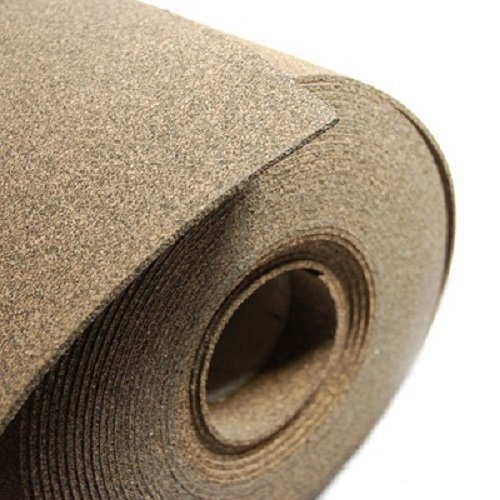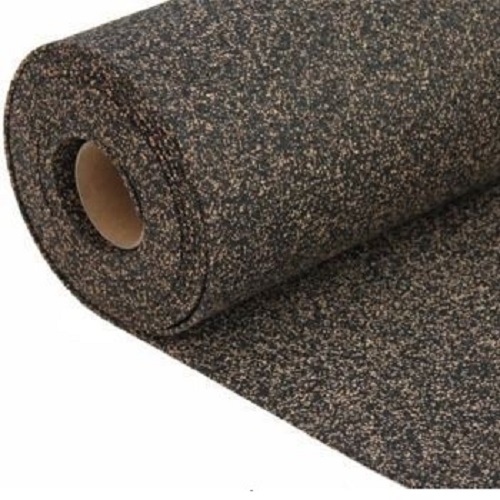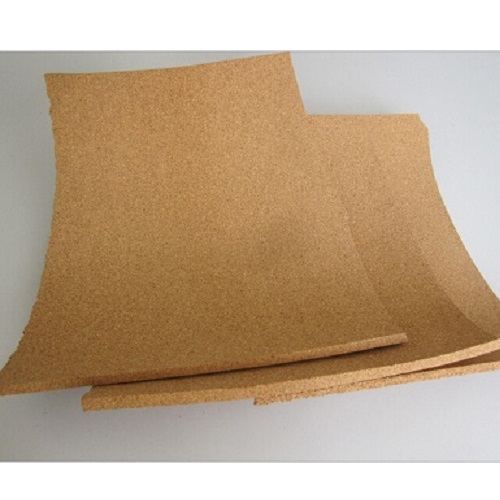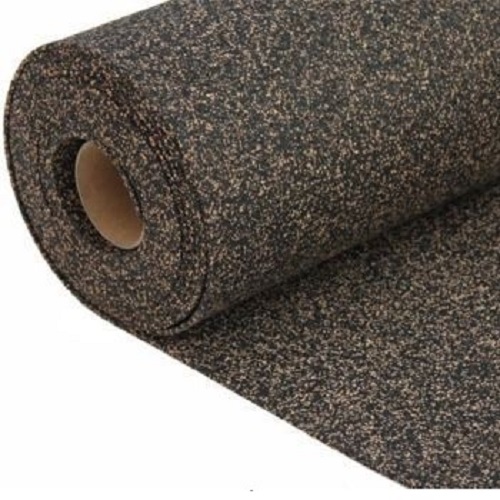

Marine environments represent one of the most demanding settings for any sealing material. Constant exposure to saltwater, wide temperature fluctuations, mechanical vibration, and high-pressure conditions create a sealing challenge that few materials can handle with long-term reliability. Cork Rubber Sheet has emerged as a proven engineering solution, combining the natural resilience of cork granules with the chemical durability of rubber to deliver superior sealing performance exactly where it matters most.
At Ningbo Kaxite Sealing Materials Co., Ltd., our engineering team has worked closely with marine OEMs, shipbuilders, and maintenance specialists for years to develop cork rubber sealing materials that directly address the recurring pain points of the industry. This article walks through the specific challenges marine engineers face, how our Cork Rubber Sheet addresses each one, what performance parameters matter most, and how to select the right grade for your application.
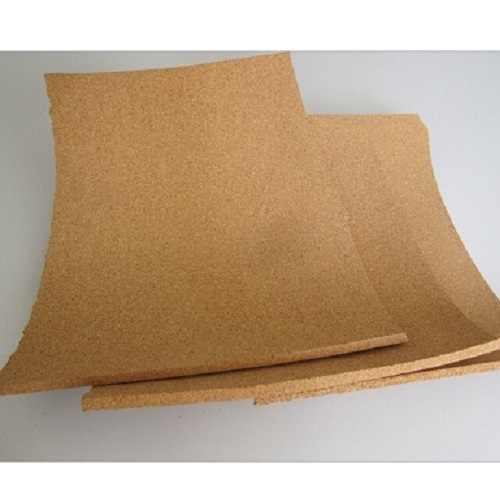
The marine industry places extraordinary demands on every component aboard a vessel, and sealing materials are no exception. Unlike industrial settings on land, marine applications combine multiple destructive forces simultaneously, creating conditions that quickly expose the weaknesses of inferior sealing products. Understanding these stressors is the first step in choosing a material that will truly perform.
The primary challenges our customers consistently report include the following:
Standard rubber sheets, paper gaskets, or compressed fiber materials each address some of these challenges but struggle to meet all of them simultaneously. That is the core problem that Cork Rubber Sheet is engineered to solve.
At Ningbo Kaxite Sealing Materials Co., Ltd., our product development is guided by real-world feedback from marine engineers operating in exactly these conditions. Our Cork Rubber Sheet formulations are tested and validated against the full spectrum of marine stressors, ensuring that each sheet we manufacture delivers consistent, long-term sealing performance regardless of the operating environment aboard the vessel.
The structural composition of Cork Rubber Sheet gives it a unique combination of properties that no single-material gasket can replicate. By bonding natural cork granules into a rubber matrix, the material inherits the best characteristics of both components while eliminating the individual weaknesses of each. This makes it particularly well suited to the multi-stress conditions found throughout marine vessels.
Below are the core reasons marine engineers and shipbuilders consistently specify Cork Rubber Sheet for critical sealing tasks:
The cellular structure of natural cork granules allows our Cork Rubber Sheet to compress and flow slightly under bolt load, filling micro-gaps and surface imperfections in flange faces without requiring perfectly machined surfaces. This property is especially valuable on older vessels where flange surfaces have developed wear over years of service. The material seals effectively where rigid gasket materials would simply bridge over voids and allow leakage.
Marine engines produce continuous broadband vibration. Our Cork Rubber Sheet absorbs and dissipates mechanical energy through its cork-rubber composite structure rather than transmitting it across the joint. This not only prevents the gasket itself from fatiguing but also reduces bolt loosening caused by vibrational micro-movement, extending the reliable service interval between maintenance stops.
Our rubber binder options include Nitrile (NBR), Neoprene (CR), and EPDM formulations, each offering targeted resistance to fuels, oils, hydraulic fluids, saltwater, and coolants. Depending on the specific marine application, our team at Ningbo Kaxite Sealing Materials Co., Ltd. can recommend the correct rubber binder to match the fluid medium and chemical environment your seals will encounter.
Our standard Cork Rubber Sheet performs reliably across a temperature range of -40 degrees Celsius to 120 degrees Celsius, with specialty grades available for applications requiring sustained performance up to 150 degrees Celsius. This makes it suitable for engine room gaskets, exhaust flange seals, and fuel system connections that experience significant thermal variation during vessel operation.
Because our Cork Rubber Sheet resists compression set, it maintains sealing force throughout a longer service cycle than conventional paper or rubber-only gaskets. This directly reduces the frequency of unscheduled maintenance stops, which is a significant operational and cost advantage in commercial marine operations.
The combination of these properties is why Ningbo Kaxite Sealing Materials Co., Ltd. has become a trusted supplier of Cork Rubber Sheet to marine equipment manufacturers and shipbuilding operations across multiple regions. Our material does not ask the engineer to make trade-offs between compressibility and chemical resistance, or between vibration damping and temperature performance. It delivers all of these properties in a single, cost-effective sheet material.
Selecting the correct sealing material requires more than general performance claims. Engineers need precise technical data to match the material to the application. The following tables summarize the core performance parameters and available specifications for our Cork Rubber Sheet product line at Kaxite Sealing.
| Property | Test Standard | Typical Value | Unit |
| Density | ASTM D1667 | 0.45 - 0.85 | g/cm3 |
| Tensile Strength | ASTM D412 | 1.5 - 3.5 | MPa |
| Elongation at Break | ASTM D412 | 30 - 80 | % |
| Compressibility | ASTM F36 | 7 - 35 | % |
| Recovery after Compression | ASTM F36 | Greater than 60 | % |
| Hardness (Shore A) | ASTM D2240 | 40 - 75 | Shore A |
| Compression Set (22h / 70°C) | ASTM D395 | Less than 25 | % |
| Oil Swell (Fuel B, 70h / 23°C) | ASTM D471 | Less than 20 | % volume change |
| Parameter | Standard Range | Custom Range Available |
| Sheet Width | 1000 mm / 1270 mm | Up to 1500 mm |
| Sheet Length | 1000 mm / 2000 mm | Roll format available |
| Thickness | 1.0 mm to 6.0 mm | 0.5 mm to 12.0 mm |
| Cork Content by Weight | 40% - 70% | Custom blends on request |
| Rubber Binder Type | Key Resistance Properties | Recommended Marine Application | Temperature Range |
| Nitrile (NBR) | Fuels, oils, hydraulic fluids | Engine gaskets, fuel system seals | -40°C to 120°C |
| Neoprene (CR) | Saltwater, ozone, weathering | Hull fittings, deck seals, exhaust | -40°C to 100°C |
| EPDM | Coolants, steam, UV exposure | Cooling system gaskets, hatch seals | -50°C to 150°C |
| Silicone Blend | High temperature, low compression set | Exhaust manifold, high heat areas | -60°C to 200°C |
| Standard / Certification | Scope | Status |
| MIL-G-12803 | Cork rubber gasket material for military and marine use | Compliant grades available |
| ASTM F152 / F36 | Gasket compressibility and recovery testing | Tested and documented |
| ISO 9001:2015 | Quality management system | Certified |
| RoHS | Restriction of hazardous substances | Compliant |
Our factory maintains full batch traceability for all Cork Rubber Sheet production, and our technical team at Ningbo Kaxite Sealing Materials Co., Ltd. is available to provide material test reports, sample sheets, and application-specific recommendations upon request.
Understanding where and how to deploy Cork Rubber Sheet across a marine vessel requires a practical look at the sealing scenarios that arise throughout the ship structure. From the engine room to the deck, different areas present different combinations of pressure, temperature, chemical exposure, and surface conditions. Our material's versatility means it addresses this broad range of demands from a single product family.
The engine room is the most demanding sealing environment on any vessel. Heat, oil, fuel, and persistent mechanical vibration combine to degrade conventional gaskets quickly. Our NBR-bonded Cork Rubber Sheet delivers reliable compression and recovery under the cyclic thermal and mechanical loads typical of marine diesel and gas turbine installations. The material conforms to worn cast-iron and steel flange surfaces without requiring machined finishes, reducing the time and cost of engine maintenance at port.
Through-hull fittings create permanent penetrations in the hull that must remain sealed against seawater under static head pressure and dynamic wave loading. Neoprene-bonded Cork Rubber Sheet provides excellent resistance to saltwater, ozone, and continuous immersion while maintaining the compressibility needed to achieve a reliable seal at the hull fitting interface. Our Neoprene grades resist degradation from the UV and oxidative exposure present at waterline zones.
Hatch covers, equipment mounting flanges, and deck penetrations require sealing materials that resist both weather exposure and mechanical loading from foot traffic and equipment operation. EPDM-bonded Cork Rubber Sheet handles UV, ozone, rain water, and temperature cycling without hardening or cracking, maintaining a reliable weather seal across the service life of the hatch or deck fitting.
Marine cooling systems circulate both raw seawater and treated freshwater through heat exchangers and coolers. Gaskets in these systems must resist chemical attack from the coolant media while maintaining sealing force under moderate pressure and thermal cycling. Our EPDM and NBR Cork Rubber Sheet grades are both well suited to this application, with our technical team able to advise on the optimal grade based on your specific coolant chemistry and operating temperature.
Deck machinery including winches, steering gear, and davits use high-pressure hydraulic systems that require gaskets with low oil swell and strong compression recovery. Our NBR Cork Rubber Sheet maintains dimensional stability in hydraulic oil environments, preventing extrusion and blow-out under operating pressures typical of marine hydraulic circuits.
| Marine Application Area | Recommended Grade | Key Performance Requirement | Typical Thickness |
| Engine room flanges | NBR Cork Rubber Sheet | Oil/fuel resistance, vibration damping | 1.5 mm - 3.0 mm |
| Hull through-fittings | Neoprene Cork Rubber Sheet | Saltwater resistance, ozone resistance | 2.0 mm - 4.0 mm |
| Hatch and deck seals | EPDM Cork Rubber Sheet | UV resistance, weather sealing | 3.0 mm - 6.0 mm |
| Cooling system gaskets | EPDM or NBR Cork Rubber Sheet | Coolant resistance, thermal cycling | 1.0 mm - 2.0 mm |
| Hydraulic system gaskets | NBR Cork Rubber Sheet | Low oil swell, high pressure recovery | 1.0 mm - 2.0 mm |
| Exhaust system flanges | Silicone Cork Rubber Sheet | High temperature stability | 2.0 mm - 3.0 mm |
Our production facilities at Ningbo Kaxite Sealing Materials Co., Ltd. are capable of supplying Cork Rubber Sheet in custom cut gasket form, full sheets, or roll stock to suit your procurement and fabrication workflow. Our factory team works with marine procurement engineers to ensure that lead times, dimensional tolerances, and documentation requirements are met for each order.
Choosing the correct Cork Rubber Sheet specification is a technical decision that directly affects seal performance, service life, and total maintenance cost. An incorrect selection can result in premature leakage, material degradation, or unnecessary expense from over-engineering the seal. The selection process involves matching the material properties to the specific demands of the application across four key variables.
The chemical nature of the fluid being sealed is the first and most critical selection criterion. Each rubber binder type in our product range offers a different resistance profile:
Cross-reference the expected minimum and maximum service temperature against the temperature rating of the selected rubber binder grade. For engine room applications where temperature variation is wide and rapid, prioritize grades with both a low cold-flex temperature and a high upper service limit. Our EPDM and silicone grades offer the broadest thermal range, while NBR and Neoprene are optimized for moderate temperature service.
Thickness selection depends on the surface condition of the mating flanges and the available bolt load. Rougher, more irregular surfaces require thicker sheets with higher compressibility to bridge surface voids. Smoother, precision-machined surfaces can be sealed with thinner sheets, which also reduces the risk of excessive compression set under high bolt load. The following general guidance applies:
Higher operating pressures require higher bolt loads to achieve and maintain the seating stress needed for reliable sealing. Our denser, higher-hardness grades are better suited to high-pressure applications where softer grades might extrude from the joint under load. Our technical team at Ningbo Kaxite Sealing Materials Co., Ltd. can perform a bolt load and seating stress calculation for your specific flange geometry if required.
| Selection Criterion | Condition | Recommended Action |
| Fluid medium | Petroleum oil or fuel | Select NBR grade |
| Fluid medium | Saltwater or ozone | Select Neoprene grade |
| Fluid medium | Coolant or water | Select EPDM grade |
| Temperature | Above 120°C sustained | Select Silicone or EPDM grade |
| Surface condition | Worn or pitted flanges | Increase thickness to 3.0 mm or above |
| Pressure | High pressure hydraulic system | Select higher hardness, lower thickness grade |
| Vibration | Direct engine mount application | Select higher cork content grade for damping |
If you are unsure about any aspect of the selection process, our engineering support team at Kaxite Sealing welcomes technical inquiries. We regularly provide application-specific recommendations, sample sheets for prototype testing, and full material data sheets to support our customers through the specification and approval process. Our factory can also produce custom-cut gaskets to your engineering drawings, reducing fabrication time and material waste at your facility.
Marine sealing is a discipline where material selection directly determines operational reliability, maintenance frequency, and the safety of the vessel and its crew. The combination of saltwater exposure, mechanical vibration, thermal cycling, chemical attack, and surface imperfection found throughout a working ship creates a sealing environment that generic materials simply cannot serve reliably over a long service life.
Cork Rubber Sheet addresses this challenge through its unique composite structure, delivering compressibility, chemical resistance, vibration damping, and thermal stability in a single material. Across engine room gaskets, hull fittings, deck seals, cooling systems, and hydraulic connections, our product line provides a reliable, long-lasting sealing solution that reduces maintenance costs and unplanned downtime.
Ningbo Kaxite Sealing Materials Co., Ltd. brings deep product expertise and manufacturing capability to every order. Our range of rubber binder options, thickness configurations, and custom fabrication services means we can meet the specific requirements of any marine sealing application, from new vessel construction to retrofit and maintenance programs on existing fleets.
Our engineering team at Ningbo Kaxite Sealing Materials Co., Ltd. is ready to help you select the right Cork Rubber Sheet grade, provide technical data sheets, and arrange sample material for your evaluation.
Contact us today with your application details and let our specialists recommend the optimal sealing solution for your marine project. Whether you need standard sheet stock, custom-cut gaskets, or a high-volume supply program, our factory has the capacity and technical expertise to support your requirements.
Get in touch with Ningbo Kaxite Sealing Materials Co., Ltd. and experience the difference that the right material makes.